Am I Trans? Exploring Gender Identity with Care and Curiosity

If you have found yourself searching “Am I trans?”, I want you to know something before we go any further:
You do not have to have all the answers today.
Questioning your gender can feel tender, confusing, exciting, frightening, freeing, overwhelming, or all of those things at once. Sometimes it arrives as a quiet thought that keeps returning. Sometimes it feels like a sudden realisation. Sometimes it has been there for years, tucked away under “I’ll think about that later.”
And sometimes, honestly, it can feel like opening a cupboard and everything falls out at once.
So let’s slow it down.
This blog is not here to tell you who you are. Nobody else gets to do that for you.
But I hope it gives you a gentle place to begin exploring what you might already know somewhere inside yourself.
What does it mean to be trans?
Being trans means your gender is different from the sex you were assigned at birth. Some trans people are men. Some are women. Some are non-binary, genderqueer, genderfluid, agender, or use different language altogether.
Some people know from a very young age.
Some people realise later in life.
Some people feel certain quickly.
Some people question for a long time.
Some people transition socially, medically or legally.
Some people do not.
There is no single way to be trans.
The NHS explains that gender dysphoria is a sense of unease someone may have because of a mismatch between their biological sex and gender identity, and that it is not related to sexual orientation.
That distinction matters because who you are and who you are attracted to are not the same thing.
What if I am not sure?
Not being sure does not mean you are making it up.
I think this is one of the biggest things people need to hear when they are questioning gender. Doubt is not proof that your feelings are false. It might simply mean you are exploring something big, and your mind is trying to keep you safe while you do it.
You might be asking yourself:
“Am I trans?”
“Am I non-binary?”
“Am I genderfluid?”
“Do I dislike my gender, or just the expectations placed on it?”
“Do I want to transition, or do I just want more freedom?”
“What if I’m wrong?”
“What if I’m right?”
That last one can be the scariest question of all.
Because sometimes the fear is not that you are confused. Sometimes the fear is that you are starting to hear yourself clearly.
Gender questioning does not need to be rushed
There can be so much pressure around gender identity.
Pressure to know.
Pressure to explain.
Pressure to come out.
Pressure to pick the right label.
Pressure to be certain before you have even had space to breathe.
But questioning can be a process. It is allowed to unfold.
You are allowed to explore your gender privately before you share it publicly.
You are allowed to try the language and change your mind.
You are allowed to use one label now and another later.
You are allowed to not use a label at all.
You are allowed to move slowly.
You are also allowed to feel joy.
I say that because conversations about trans identity can become so focused on pain, dysphoria and struggle that we forget to talk about relief, recognition, aliveness and possibility.
Gender dysphoria and gender euphoria
You may have heard the term gender dysphoria.
For some people, dysphoria can feel like distress, discomfort, sadness, anger, numbness or disconnection linked to how they are perceived, named, addressed, expected to behave, or related to their body.
But not every trans person experiences dysphoria in the same way. And for some people, another word is just as important:
Gender euphoria.
Gender euphoria can be the feeling of rightness, relief, joy or recognition that happens when something fits.
It might show up when:
Someone uses a different name for you
You try different pronouns
You wear clothes that feel more like you
You cut or grow your hair
You see yourself in a photo and feel a little more present
You are recognised in a way that feels true
You imagine a future version of yourself and feel hope instead of dread
Sometimes the question is not only, “What hurts?”
Sometimes the question is also:
“What feels like breathing?”
Signs you might be questioning your gender
No checklist can tell you whether you are trans. But there are some experiences that might invite curiosity.
You might notice:
feeling uncomfortable with being seen as your assigned gender
wishing people used a different name, pronouns or words for you
feeling disconnected from gendered expectations
imagining yourself as another gender and feeling relief
feeling drawn to trans, non-binary or gender-diverse stories
feeling envy when other people express gender in ways you want to
feeling anxious, sad or numb when forced into certain gender roles
wanting your body, clothes, voice or presentation to feel different
feeling like you are performing gender rather than living it
feeling unexpectedly emotional when someone sees you accurately
You do not need to relate to all of these. You do not even need to relate to most of them.
They are just doorways into reflection.
Questions to gently explore
You might want to journal these, talk them through with someone safe, or simply sit with them quietly.
Questions about comfort
When do I feel most like myself?
Are there situations where I feel like I am performing a role?
What parts of how people see me feel uncomfortable?
What parts feel affirming?
Questions about language
How do I feel when people call me a woman, man, girl, boy, lady, gentleman, daughter, son, sister, brother, mum, dad, partner or friend?
Are there words I secretly wish people would use for me?
Are there words that make me tense?
Questions about possibility
If nobody judged me, what might I want to try?
If I could wake up tomorrow and be seen exactly how I wanted, what would be different?
What feels exciting but scary?
What feels peaceful?
Questions about fear
What am I afraid would happen if I explored this?
Whose reaction am I carrying?
What support would make this feel safer?
Am I trying to protect myself from harm, rejection or change?
These questions are not a test. They are an invitation.
You do not have to prove you are “trans enough”
I want to say this very clearly.
You do not have to prove your gender through suffering.
You do not have to have known since childhood.
You do not have to hate your body.
You do not have to want a medical transition.
You do not have to dress a certain way.
You do not have to be masculine, feminine or androgynous in a way that makes sense to other people.
You do not have to tell everyone.
You do not have to be certain before you deserve kindness.
There is no committee somewhere handing out permission slips.
And I know that sounds simple, but for a lot of people, it is deeply emotional. Because many trans, non-binary and questioning people have spent so long being asked to justify something that should have been met with care.
Exploring safely and gently

For some people, exploring gender starts with small, private steps.
That might include:
writing about your gender without censoring yourself
trying a different name in a journal or online space
testing pronouns with a trusted person
experimenting with clothes, hair or presentation
reading trans and non-binary stories
joining a peer support space
speaking with an affirming therapist
noticing what brings relief, not just what brings fear
Small steps count.
You do not need to announce anything before you are ready. You do not need to make every exploration permanent. You are allowed to gather information about yourself slowly.
What if I am scared of how people will react?
This fear is real.
For many people, questioning gender is not only an internal process. It can also involve family, work, school, healthcare, faith communities, partners, friendships, safety and housing.
That is why I never want to frame gender exploration as if it happens in a vacuum.
People are not scared because they are weak. People are scared because rejection, discrimination and misunderstanding can have real consequences.
Stonewall’s trans resources highlight that trans people in the UK continue to face discrimination and challenges, while NHS guidance also recognises that LGBTQ+ people may experience poorer mental health linked to bullying, rejection, discrimination and isolation.
So if you are scared, please do not shame yourself for that.
Fear does not mean your identity is wrong. It may mean you need support, safety planning, community, and time.
What if I need professional support?
You do not need to be in crisis to ask for support.
You might want support because you are questioning.
You might want support because you feel overwhelmed.
You might want support because family reactions are difficult.
You might want support because dysphoria, anxiety or depression is affecting your daily life.
You might want support because you need a space where your identity is not treated like a debate.
A good therapist should not push you towards a particular identity. They should not rush you, dismiss you, or make your gender the whole problem.
They should offer space for you to explore your feelings, your history, your fears, your hopes, your body, your relationships and your sense of self with care.
For people seeking NHS gender identity support, waiting times for gender dysphoria clinics can be long, and the NHS says support from GPs and other organisations may be important while people wait.
A note for young people and families

If you are a young person questioning your gender, you deserve support that is calm, safe and compassionate.
If you are a parent, carer or family member reading this because someone you love has said they might be trans, non-binary or questioning, the most helpful first response is usually not panic.
It is listening.
You do not have to understand everything immediately to be kind.
You do not have to have perfect language to show someone they are loved.
We are now the mental health partner for The Proud Trust, so please reach out to find out more about our work with 12 years and up.
How Be/Here can support you
At Be/Here, we know that gender identity is not just a topic. It is someone’s life, body, safety, relationships, history and future.
We are a queer-owned, queer-built mental health service rooted in Greater Manchester, with online support available more widely.
We offer:
person-centred LGBTQIA+ therapy
sliding-scale counselling
free mental health skills workshops
community support spaces
support for people exploring identity, anxiety, shame, family pressure, minority stress and belonging
Our role is not to tell you who you are.
Our role is to offer a safe, ethical and affirming space where you can hear yourself more clearly.
You can come questioning.
You can come uncertain.
You can come with no label.
You can come with a label that feels almost right but not quite.
You can come because you are tired of carrying it alone.
There is room for all of that here.
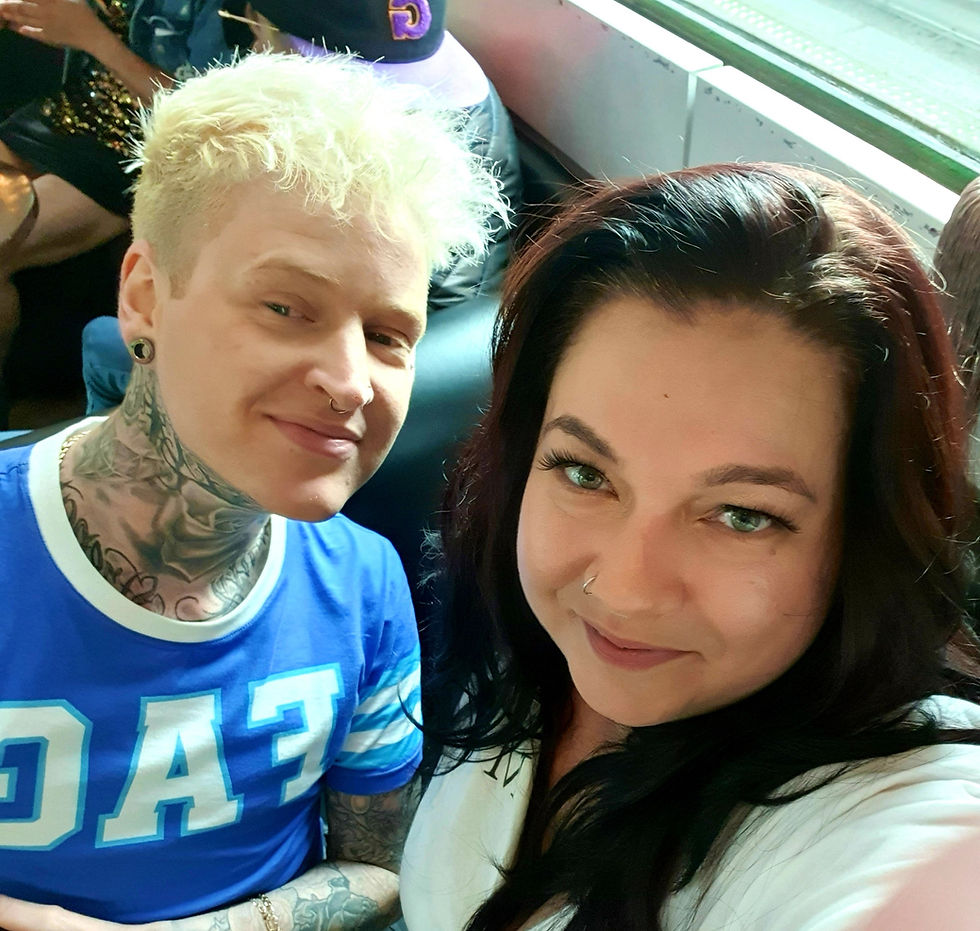
A final note from Jaye and Vanessa
If you are asking, “Am I trans?”, I want you to know that you do not have to answer that question under pressure.
You are allowed to be curious.
You are allowed to be scared.
You are allowed to feel joy.
You are allowed to take your time.
You are allowed to change language as you learn more about yourself.
You are allowed to seek support before everything feels clear.
You are not a problem to be solved.
You are a person to be met with care.
And whatever you discover about yourself, you deserve support that honours the whole of you.
If this blog speaks to something you are exploring, you are welcome to connect with Be/Here.
We offer person-centred LGBTQIA+ therapy, sliding-scale counselling, free mental health skills workshops, and community support spaces.
You do not need to have the “right words” before you reach out.


Comments